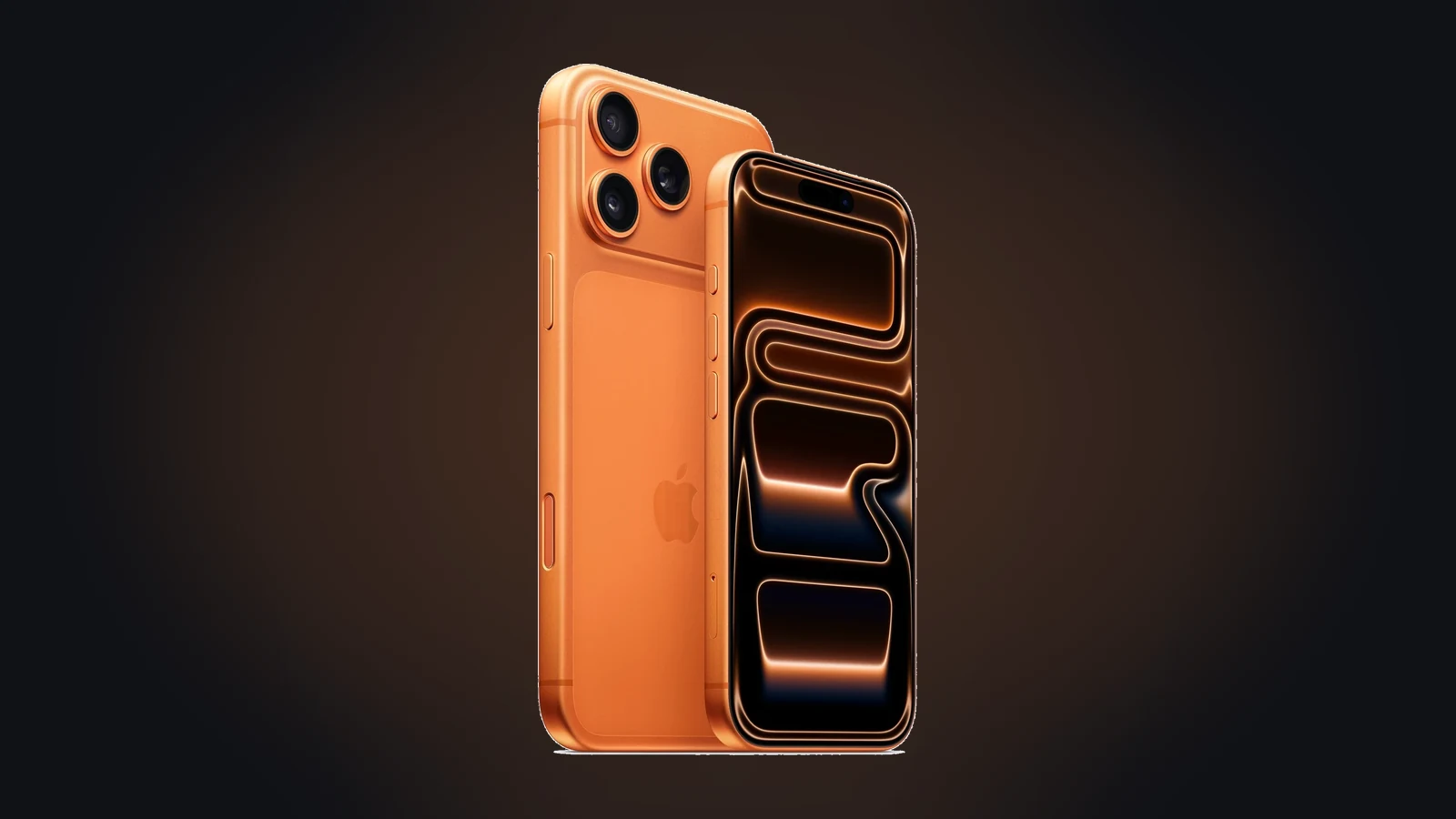
iPhone 17 Pro Max 2TB After 4 Months — The Real Upgrade?
Four months with the 2TB iPhone 17 Pro Max. Headroom, sustained performance, creator workflow, and whether 2TB is a real tool or just an expensive flex.
This is the iPhone 17 Pro Max, the 2TB model, reviewed the only way that's actually useful: after you've lived with it long enough for the hype to disappear.
Day-one reviews are mostly a spec recap and a camera montage. Four months later you find out what matters in real life. You find out whether the battery is actually "Pro Max good" or just marketing. You find out whether performance stays consistent under load, not just for a quick benchmark run. You find out whether the size is something you get used to or something you tolerate every day.
We're also going to talk about the controversial part of this specific model: the 2TB storage. Not as a flex, but as a practical question. Does it change how you use the phone, or is it money you'll never see again?
This review focuses on the 17 Pro Max experience over four months — what it actually delivers in daily life, and where the trade-offs land relative to the regular 17 Pro. Not everyone needs the Pro Max. But for creators, for people on their phone constantly, for anyone tired of watching the battery percentage like a stock chart, the Pro Max starts to make more sense.
Display and In-Hand Reality
The first thing you notice with the 17 Pro Max is that the screen is simply unfair.
Not because it's "sharp" or "colour accurate" — every flagship is at this point. The real difference is how readable the panel stays when you're outside. As a camera viewfinder in daylight, while navigating, while reading anything without turning your body into a human shade — it's just easier.
That matters more than people admit. If you're filming or taking photos, your screen is your confidence. If you can clearly see what you're framing, you shoot more, you shoot faster, and you mess up fewer takes.
Physically, the Pro Max is always a trade-off. The benefits are obvious: it's incredible for editing, reading, watching content, and having more space for everything. The cost is also obvious the second you try to use it one-handed.
The first week is your hand learning a new language. You stop reaching for certain corners. You start using two hands more often. You notice that some pockets are no longer "safe pockets." And on a long day, you feel the weight in a way you never do with a smaller Pro.
The Pro Max experience doesn't really become "normal" until you accept that it's a two-hand phone. Once you stop fighting that, it becomes one of the best daily screens you can have — especially if your life involves reading, messaging, spreadsheets, editing, maps, or watching content.
Is the display amazing? Yes, obviously. The real question is whether you want to live with a big phone every day in exchange for everything that comes with it. That's what the Pro Max is: comfort traded for capability.
Performance and Heat — Real Use
Most phones sound impressive for thirty seconds, and then reality kicks in.
Performance isn't just about being fast when you open an app. It's about what happens when you do the annoying, heavy things that actually stress a phone. Long camera sessions. Editing. Exporting. Uploading. Switching between apps while something is rendering in the background. Gaming for an hour to see if the phone turns into a hand warmer.
The main thing we've noticed over months of use is consistency. The 17 Pro Max doesn't behave like a phone with two personalities — brilliant at the start and quietly slower once it warms up. It feels like it's built to stay in that "fast" state longer.
Anyone who's pushed an older Pro-series iPhone hard will know exactly why we keep coming back to heat. Those phones could get noticeably warm during heavier use, and once a phone starts running hot it doesn't just feel uncomfortable — it can dim the display, throttle performance, and make the whole experience feel inconsistent. With the 17 Pro Max, the difference is that heat feels more controlled. It still warms up under load, but it doesn't feel like it's constantly on the edge.
The phone never being warm isn't the claim. Any thin slab doing heavy work will warm up. The point is that the warmth doesn't immediately translate into the phone feeling unstable or uncomfortable. You don't get that constant worry of "is it going to dim the screen, throttle, or throw a temperature warning?"
That lack of friction is one of the most underrated parts of the Pro Max experience. The phone stops being something that might interrupt you, and becomes something you can trust to keep going.
Day-to-day, everything is instant. Multitasking is effortless. On-device editing feels practical rather than "possible." Back-to-back heavy tasks don't feel like you're forcing a phone to behave like a computer — it feels like the phone was designed to handle that workload.
The performance story isn't "it's the fastest iPhone." Of course it is. The real story is that it stays fast in real use, over time. That's what you want from the most expensive model.
Cameras for Real Filming
The Pro Max makes its strongest argument here, because the camera system isn't just about slightly nicer photos. It's about making filming feel easier, more reliable, and more flexible.
**Dual Capture** is the feature we want to call out first. Recording with the front and rear cameras simultaneously sounds like a gimmick until you try to shoot anything where your reaction matters. A quick product impression, a travel moment, a "here's what I'm looking at" video, an informal interview setup. You don't need a second phone. You don't need to stitch footage together later. You hit record and you get a usable format immediately. For creators, that's less setup and less editing — and any feature that reduces setup and editing is a real upgrade, because it makes you more likely to actually shoot.
**Stabilisation** is the second practical win. "The stabilisation is better" sounds vague until you see what it means in real life: footage feels calmer, pans feel smoother, handheld movement feels less chaotic. You stop overthinking every step and record more natural clips because the phone is doing more of the work.
**Audio** matters too. A phone can have amazing video quality and still produce footage you don't want to use if the audio is harsh, thin, or messy outdoors. In casual real-world situations — wind, traffic, talking while walking — the end result feels cleaner and more usable without needing immediate rescue in post.
**Zoom flexibility** is the bigger reason people buy the Pro Max. Even if you're not a "zoom photographer," the extra reach changes your framing options. Shoot details without walking into the scene. Capture something from across a street. Get tighter framing without ruining quality. Not a party trick — a practical tool.
The theme is simple: the Pro Max camera system reduces friction. It makes it easier to get a good shot on the first attempt, and makes the phone feel less like a phone and more like a compact creator tool you already have in your pocket.
2TB Storage — Useful Tool or Expensive Flex?
The most extreme part of this model. Most people do not need this. If you buy it without a real reason, it's basically the most expensive way to buy peace of mind you'll never use.
But if you shoot a lot, 2TB genuinely changes how you use the phone.
Here's what happens with normal storage: you start thinking like a manager. You delete takes too early. You compress footage "just in case." You offload files because you're worried about running out of space. You stop recording long clips because you're thinking about storage while you're filming. All of that is friction.
With 2TB, the friction goes away. You stop treating recording as something you have to ration. You keep more takes. You keep more versions. You keep projects locally longer. You can shoot in higher quality without feeling like every clip is a problem you'll have to solve later.
Storage becomes a creative feature. It makes you more likely to record because you're not negotiating with your phone every time you hit record.
The hard truth: if you aren't filming regularly or keeping a large library locally, 2TB is wasted money. You're paying for a number you'll never touch.
The people who should consider 2TB are people who shoot long videos regularly, store a lot locally, travel and don't want to depend on cloud uploads, or simply want their phone to behave like a reliable portable drive that also happens to be a camera and an editor. Photos, social, video-watching, normal phone life — you will not use 2TB. Spend the difference on a mic, lighting, storage accessories, or just keep the money.
So the 2TB verdict isn't "cool." It's practical. It's a tool for a specific type of person, and for everyone else it's an expensive flex.
Battery — The Real Reason People Buy Pro Max
This is where the Pro Max earns its name.
The cameras are great, the display is excellent, it's fast — but the reason people keep buying the Pro Max generation after generation is simple: battery life changes how you live with the phone.
After a few months, the best compliment we can give the 17 Pro Max is that we stop thinking about the percentage.
A note on long-term battery health. Battery wear is the slow-burn cost of years of heavy daily use, and heat is one of the conditions that accelerates it. If you record a lot, game a lot, fast-charge frequently, or keep the phone plugged in during heavy tasks, you're stacking the conditions that can accelerate wear. That's why we care about the 17 Pro Max feeling more thermally controlled under load. It's not a promise that battery health will stay perfect forever, but better heat behaviour is exactly what you want from a phone you plan to keep for multiple years.
On a heavy day — lots of screen time, Bluetooth on, location on, filming clips, scrolling, messaging, some gaming — this phone gives you a feeling of headroom. It's not constantly punishing you for using it.
Headroom matters even if you're not a creator. It matters when you travel, when you're out all day, when you're using Maps, taking calls, using 5G, streaming music, and you want the phone to behave like a tool, not a responsibility.
For creators, battery matters even more because filming is a battery tax. Recording video, especially in higher quality, is the phone running hot, working the camera system heavily, writing large files, and keeping the screen bright simultaneously. The Pro Max is simply better at surviving those days without constant management.
It doesn't mean the battery never drops quickly during heavy filming — it will. That's still physics. But compared to smaller models and older generations, you're far less likely to finish the day with that anxious "I need to find a charger before I can keep using my phone normally" feeling.
For Pro versus Pro Max, this is the core difference you're paying for. Not the feeling of owning the "best." The feeling of not caring about battery.
Who Should Buy It — Pro Max vs Pro
If you value battery more than anything else, this is your phone. Leave the house in the morning, don't think about charging until late in the day.
If you film regularly — even if it's not professional work — the Pro Max also makes sense. The combination of the large screen, the stabilisation, the camera flexibility, and the ability to keep recording without worrying about heat or battery makes it the better tool than the smaller model.
If you have a real reason for 2TB — regular long video, large local libraries, treating the phone like a portable archive — this version specifically makes sense. "I want the biggest one" is not a reason.
**Pick the regular iPhone 17 Pro instead if** you care about comfort, one-hand use, pockets, and you want a phone that feels effortless to live with. Most people don't need the Pro Max size, and a lot of people will enjoy their phone more when it's not constantly asking for two hands. The smaller Pro is still fast, still shoots great, still does everything — it just won't dominate your day-to-day the way a Pro Max can.
**Keep your current iPhone if** it's still doing everything you need, you're not constantly running out of battery, and you're not trying to turn your phone into a filming tool. A working older iPhone is still a strong phone — the 17 Pro Max is a quality-of-life upgrade, not a mandatory one. If you're not feeling pain points, keep it. If you are, the Pro Max fixes a lot of them by brute force: bigger battery, bigger screen, more headroom.
Protection Setup — What We're Actually Using
With a phone at this price, we're not interested in living with the constant fear of a scratch or a drop. The goal is to use it normally, put it down normally, take it out and shoot normally, without treating it like a museum piece.
Three things, kept practical:
**A tempered-glass screen protector.** Not because the display is fragile, but because micro-scratches are what kill the "new phone feeling" the fastest. You can baby the phone and still end up with tiny marks that only show under light, and once they're there they're there.
**A case that adds grip without turning the phone into a brick.** Pro Max grip matters because of the size. A slippery surface on an already-large phone is asking for a drop. Slim and grippy beats a tank case that makes the phone feel like a power bank with a screen.
**Optional: a lens cover for the camera bump.** It's large and easy to put the phone down on a table and slowly collect micro-scratches over time. A lens cover can be useful — but only if it doesn't degrade image quality. If you're not sure, skip it and just be mindful of where the phone lands.
The goal isn't "maximum protection." It's low-friction protection that lets you actually use the device the way you paid to use it.
Final Verdict
After living with the iPhone 17 Pro Max 2TB, here's the honest conclusion.
This is not the iPhone everyone should buy. It's the iPhone for people who want the most headroom possible — not just in battery, but in overall stability. The bigger battery is a huge part of the Pro Max identity, but the other part is thermal management. Better thermals don't just keep performance consistent; they reduce the kind of heat stress that can contribute to faster battery wear over the long run.
The display is excellent in real life, especially outdoors, and the size makes everything from reading to editing more comfortable. Performance feels consistent over long sessions, which matters when you're filming, exporting, or gaming and you don't want the phone to change personality halfway through. The camera system is genuinely flexible for real filming — especially if you actually use Dual Capture and you value stabilisation and usable audio.
The Pro Max is still a trade-off. It's big. It's a two-hand phone. And if you don't care about battery, you don't push heavy tasks often, and you're not using the camera system as a tool — you're paying a premium for a lifestyle you don't live.
The 2TB model is the same story but more extreme. If you shoot a lot and keep large libraries locally, it's practical and changes your workflow. If you don't, it's just money burned on a number.
**Decision in one sentence.** If you want the best battery, the most consistent performance under load, and the least friction for filming and heavy use, the iPhone 17 Pro Max is the one. If you want comfort and the same Pro experience in a phone that doesn't dominate your hand, the iPhone 17 Pro is the smarter buy. And if your current iPhone is still doing everything you need, you're not missing out on life by keeping it — especially if your pain points aren't battery and heat under heavy use.
Key Takeaways
- Pro Max is the headroom phone — bigger battery, bigger screen, and more consistent performance under sustained load
- Dual Capture, stabilisation, and zoom flexibility are the camera features that genuinely change a creator workflow
- 2TB storage is a behaviour-changing tool for serious shooters and an expensive flex for everyone else
- Pick the regular iPhone 17 Pro if comfort and one-hand use matter more than maximum battery and screen size
- Keep your current iPhone if you're not feeling pain points — the 17 Pro Max is a quality-of-life upgrade, not a mandatory one
Where to Buy
iPhone 17 Pro Max
Apple
Links above may be affiliate links. See our affiliate disclosure.
Support BlastPixels
BlastPixels is independently run. If you find the content useful, your support helps keep it going.